




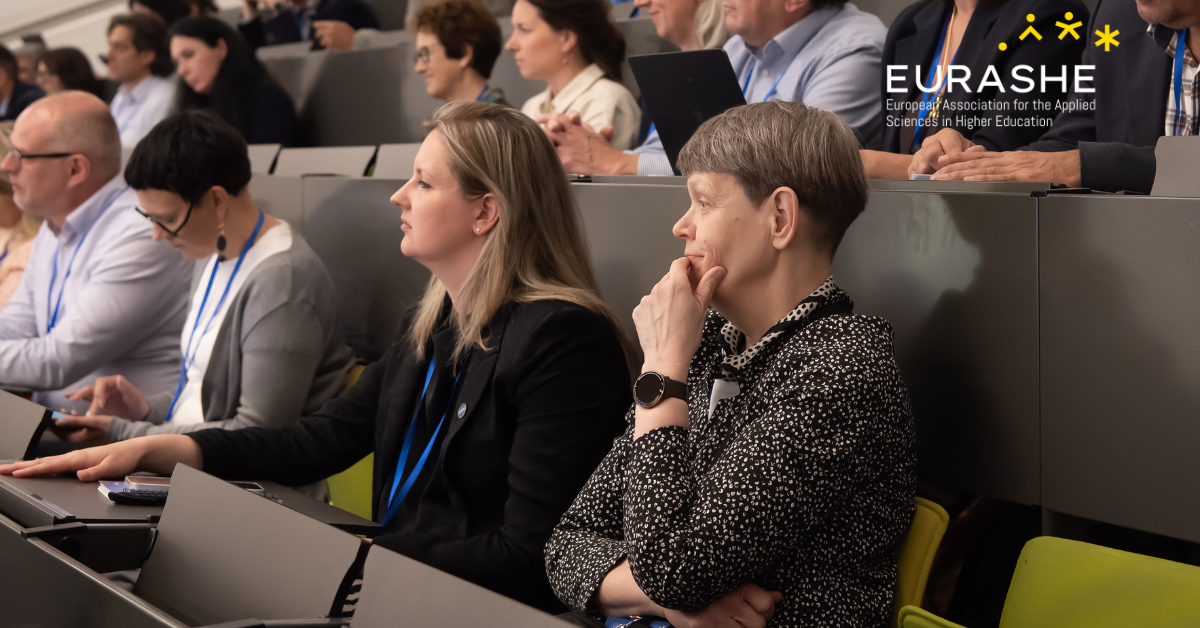
Marija Papić Stojanović, Coordinator of the International Cooperation Department at ICEPS College of Applied Studies, attended the 35th General Assembly and Annual Conference of EURASHE (the European Association for the Applied Sciences in Higher Education), held from 16 to 18 June 2026 at Amsterdam University of Applied Sciences (AUAS). The event brought together 230 higher education representatives from 30 countries, including leaders of higher education institutions, policymakers, researchers, students, and experts representing universities of applied sciences, ministries, quality assurance agencies, European organisations, local authorities, and industry.

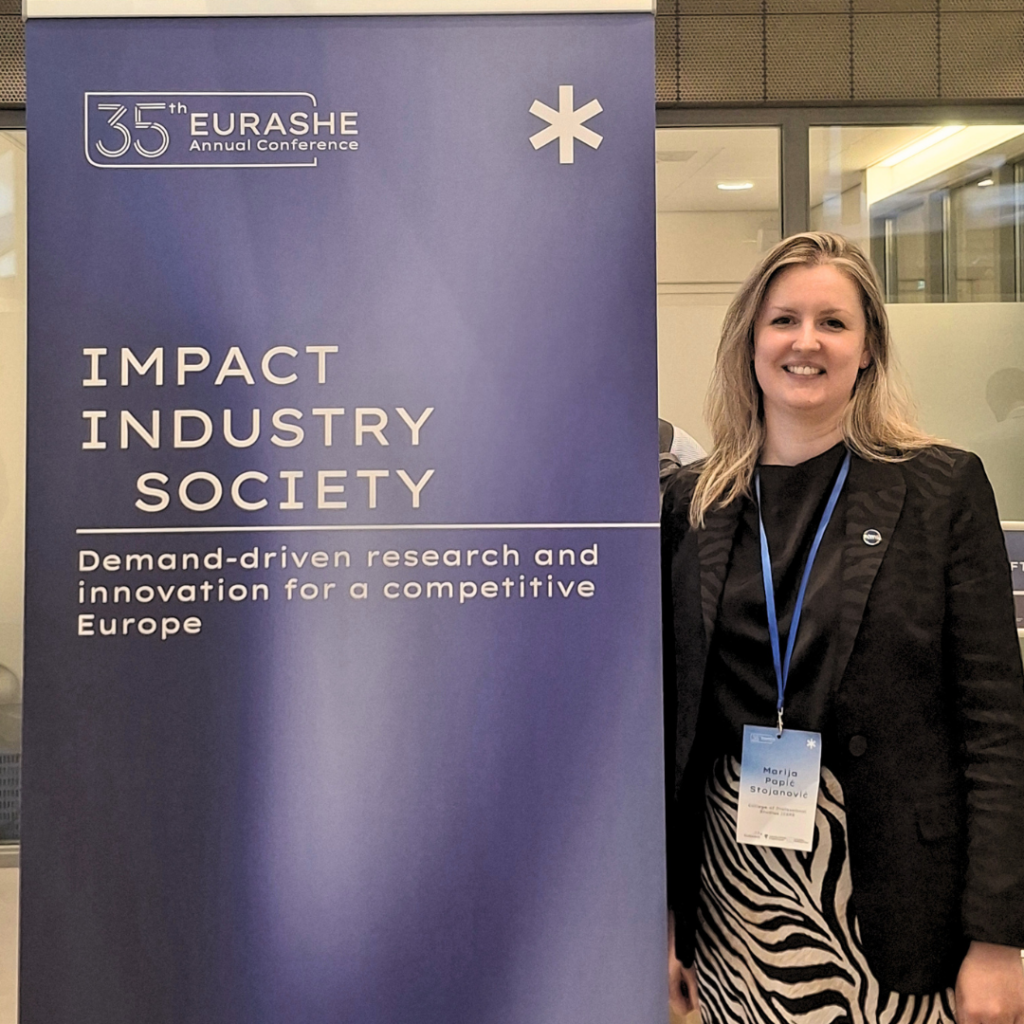

ICEPS joined EURASHE as a full member in March 2026. At the General Assembly, held on 16 June, we introduced our institution to the other members and participated in voting and decision-making on important matters concerning the future of the network.
This year’s conference, entitled “Impact, Industry, Society: Demand-driven Research and Innovation for a Competitive Europe”, focused on the role of universities of applied sciences in advancing research, innovation, skills development, and European competitiveness through close cooperation with industry, policymakers, and local communities.
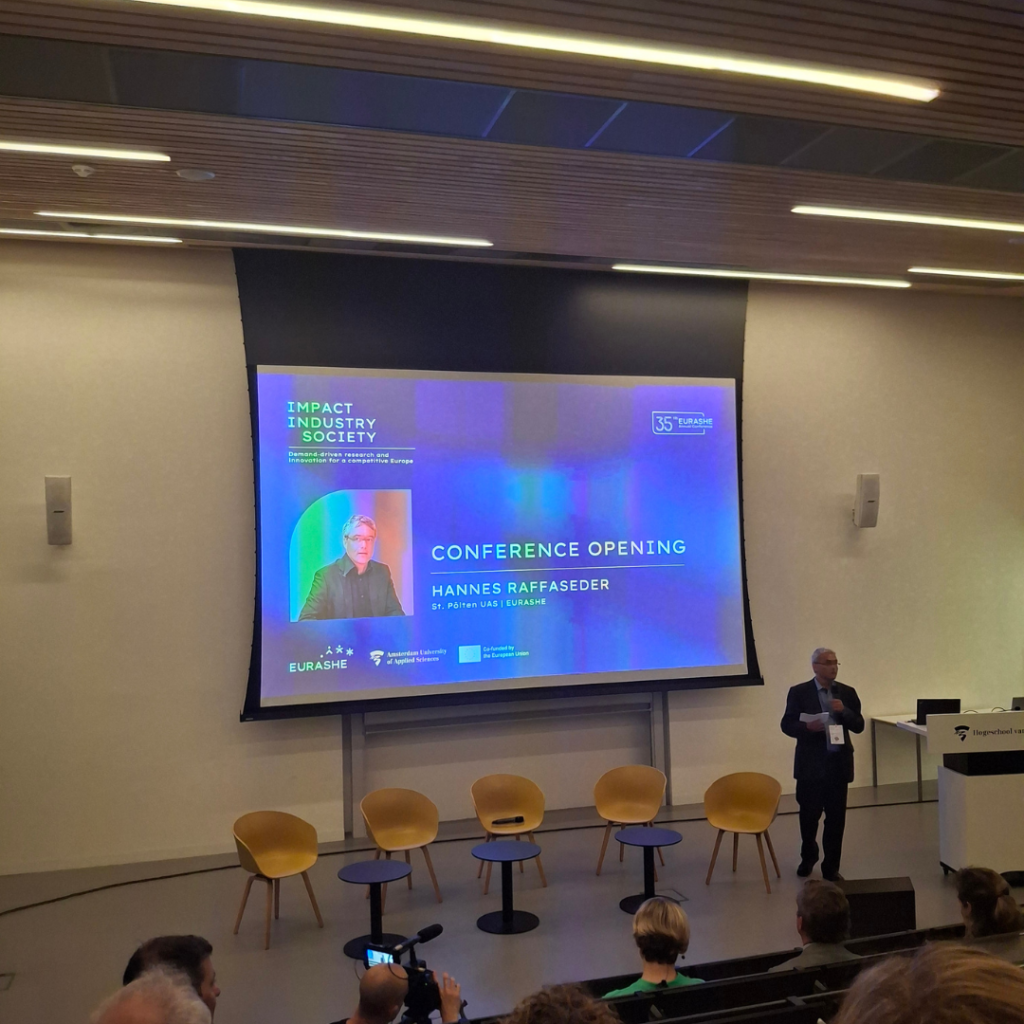
The conference was opened by EURASHE President Hannes Raffaseder, representatives of Amsterdam University of Applied Sciences, and representatives of the City of Amsterdam. European Commissioner for Startups, Research and Innovation Ekaterina Zaharieva addressed participants via video message. In his opening remarks, former Dutch Minister of Education Robbert Dijkgraaf spoke about the importance of connecting education, research, and innovation as a key factor in Europe’s future competitiveness.


The plenary sessions addressed some of the most important issues shaping the future of professional higher education. Discussions covered the role of universities of applied sciences in strengthening European competitiveness by translating research into practical innovation; the importance of partnerships between universities and cities in addressing local societal challenges; new approaches to assessing excellence in professional higher education through societal impact; and the contribution of European university alliances to the development of applied research, international cooperation, and innovation ecosystems.
One of the conference’s most notable topics was the presentation of the Professional Doctorate (PD) programmes, an innovative doctoral model currently being piloted at universities of applied sciences in the Netherlands. Unlike traditional academic doctoral programmes, professional doctorates are designed to address complex challenges arising from professional practice through applied research conducted in cooperation with industry and societal partners. The presentation highlighted the results of a seven-year national pilot project involving 26 universities of applied sciences, 164 candidates, and seven fields, including health and wellbeing, energy and sustainability, digitalisation, the arts, tourism, and other sectors. Particular attention was given to the initiative to secure legal recognition of the professional doctorate as a qualification equal in level to, but distinct in content from, the academic doctorate. This would, for the first time, grant universities of applied sciences the right to award their own doctoral degrees.
The model represents a major step forward in the development of European professional higher education, as it further connects education, research, and innovation with the specific needs of society and the labour market.
The final part of the conference featured presentations on the future direction of European research and higher education policies. Particular emphasis was placed on the need to strengthen cooperation, develop skills, improve knowledge transfer into practice, and recognise universities of applied sciences as key actors in connecting education, research, industry, and society.
Participants were also invited to continue the dialogue at the 36th EURASHE General Assembly and Annual Conference, which will be held in Vilnius, Lithuania, in May 2027.
Participation in the conference provided our institution with a valuable opportunity to exchange experiences with partners from across Europe and beyond, establish new contacts for future cooperation, and gain insight into the latest trends in European higher education policy, applied research, and internationalisation.

The conference once again confirmed the important role of universities and colleges of applied studies as a bridge between education, research, industry, and society, with the aim of developing practical solutions that address the needs of contemporary society and support sustainable regional development.